Despite undergraduate move-in day and orientation taking place six years ago, I can still vividly recall the immense anxiety I felt that afternoon. Marcia B. Baxter Magolda stated, “The early years of adult life are particularly difficult because they’re marked by the transformation from the reliance on external authority to taking ownership/responsibility for one’s life” (2002, p. 3). Simply put, I was not emotionally prepared to begin that transformation and I was quietly ashamed of this because my peers seemed to fully embrace that transition (the optimal word being “seemed”).
My reluctance to “leave the nest” was due to “the nest” always being a loving, nurturing, supportive, and comfortable environment. There was little appeal in leaving that environment. I was so consumed with how I felt in that moment that I was oblivious to the opportunity before me: four years, or more, to explore and develop my own interests, beliefs, sense of self, and interpersonal relationships. Instead, I was consumed by the overwhelming discomfort and uncertainty I was feeling. My parents were with me that day and despite our close relationship they didn’t fully understand how I felt because they both had complex relationships with their parents. Because of these complex relationships they were ecstatic and relieved to move away from home and begin college. Despite being surrounded by thousands of students and their families on move-in day, I felt isolated. Luckily, move-in day and orientation weekend provided a lot of distraction.
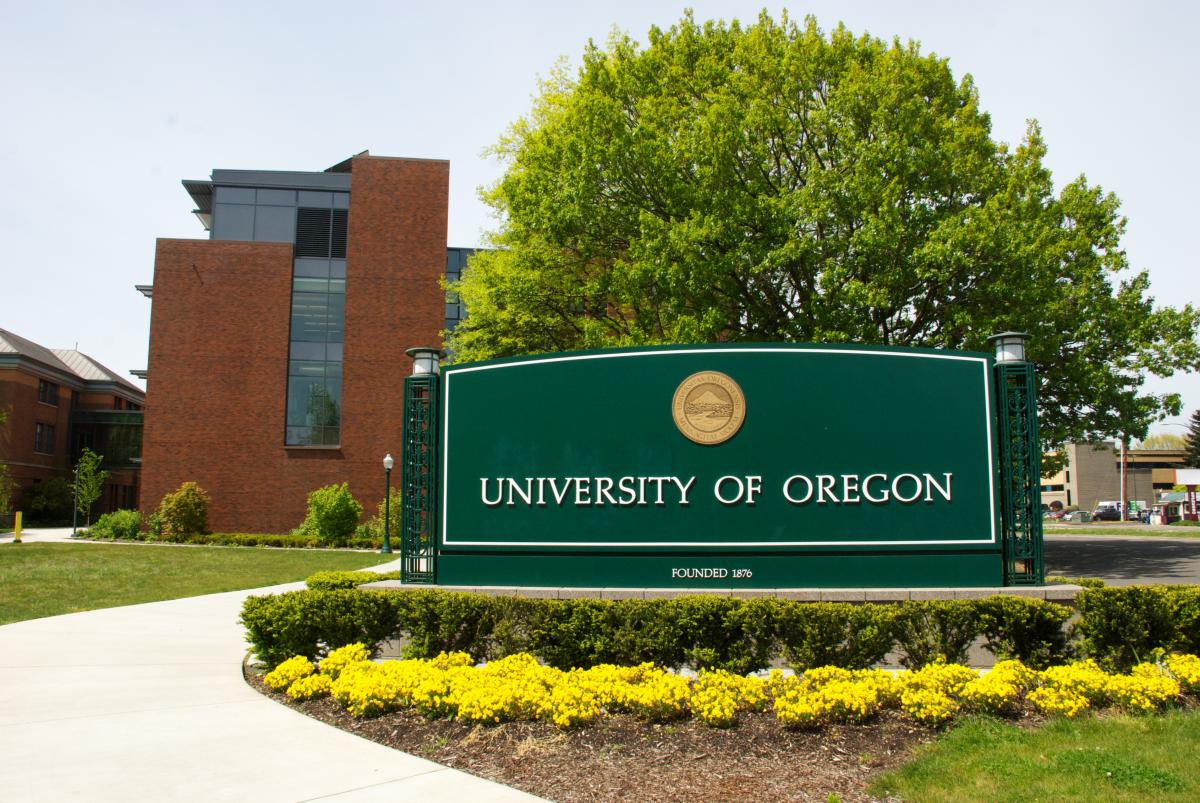
Move-in weekend at the University of Oregon (UO) was brimming with orientations and social activities facilitated by different divisions and departments on campus. These activities loosely promoted what Baxter Magolda (2002) defines as the three dimensions of development (cognitive, interpersonal, and intrapersonal), or rather, “how we know or decide what to believe, how we view ourselves, and how we construct relationships with others” (p. 8). There were seemingly endless opportunities to interact with other students, both first-year and returning students, and chances to explore our initial academic interests. In regards to academics, I was self-assured and I knew I wanted to study history. I also knew that due to the load of Advanced Placement credits I had as an incoming student I would have time to select another major and a minor. Essentially, I had the best of both worlds; I knew what I wanted to study but I also had the opportunity to explore other subjects. My preparatory work in high school equipped with me the tools to handle a college course load, both in terms of time management and academic rigor, which enabled me to succeed at UO.
When I think about my holistic development as a student, I’m proud to see the advancements I have made within all three dimensions of development, particularly at the intrapersonal level. I also see my time at William & Mary as a chance to continue this development through a more mature and mindful lens. So, rather than dreading what’s to come, as I did in my first weeks at UO, I greatly look forward to the next two years.
References:
Baxter Magolda, M. B. (2002). Helping students make their way to adulthood: Good company for the journey. About Campus, 6(6), 2-9. doi:10.1002/abc.66
 Neon Notions
Leave a comment